
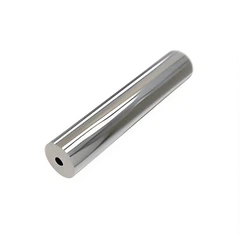











1. The magnetic flux density of the magnetic filter rod composed of extremely small magnets will not decrease by increasing the diameter of the pole plate, which is due to the magnetic flux density test performed around the circumference of the pole plate. However, due to the lack of support of the magnet in the tube, the tube wall will collapse in time. In addition, since the stress cannot be evenly distributed and concentrated only on the plate, the tube is easily broken around the plate, making the entire tube unusable and contaminating the material in more serious cases.
2. Use shredded magnets
Disadvantages: The surface Gaussian is not uniform, which is easy to cause an efficiency drop.
Broken and broken magnets are defective.
However, some unethical companies will seal them in tubes anyway, because these defects are indistinguishable from appearance and are also difficult to detect.
3. Use a "secondary magnet"
Disadvantages: The magnetic field of the tube is not uniform and the consistency is poor.
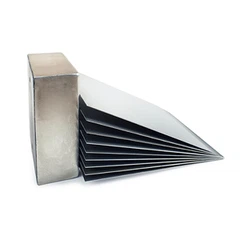
The so-called "secondary magnets" are magnets produced by top manufacturers for top buyers. However, due to various factors, these products are discarded waste products. Since they are still high-performance products, some unethical companies will buy them at discounted prices.
However, these "secondary magnets" are mostly thin pieces 3 to 10 mm thick. In addition, the sources of these "secondary magnets" are inconsistent. Therefore, the performance of the next batch purchased cannot be guaranteed, resulting in poor consistency between batches.
4. Reduce the thickness of the stainless steel pipe
Disadvantage: The service life of the solenoid tube is shortened.
SS304 and SS316 stainless steel are commonly used materials for manufacturing magnetic filter rods/rods/tubes. In the market, the thinnest SS304 tube is between 0.45-0.50 mm. If the tube becomes thinner, the life of the tube will be greatly reduced.
Due to fewer applications and incomplete specifications, the thinnest SS316 tube is found to be between 0.75-0.80mm. This is also the reason why the surface Gaussian of the magnetic filter rod/bar/tube made of SS316 is lower than that of the tube made of SS304.
If the mass production needs to be stable, the company can produce a 0.5mm thick SS316 pipe (the minimum order quantity is 500kg). However, some unscrupulous companies will manufacture solenoid tubes with a thickness of only 0.3mm, allowing the use of weaker magnets to achieve a higher surface, Gauss.
How the above method unethically reduces the cost of magnetic separation. Please be careful when purchasing magnetic filter tube products.