



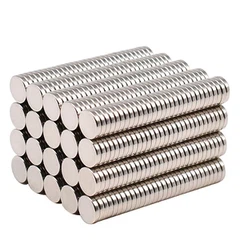



















N45 grade neodymium magnets are an extremely powerful permanent magnet type available commercially today. They are made from an alloy containing neodymium, iron, and boron. They are also called NdFeB.
This article focuses on N45 neodymium magnets. It talks about what they're like, why they're strong, how people use them, and more. Keep reading to learn all about these very powerful permanent magnets.

What is N45 Magnet?
N45 refers to a particular grade of a neodymium magnet with a maximum magnetic energy product of 45 MGOe and a maximum operating temperature range of 80°C to 200°C.
Neodymium magnets are manufactured by manipulating the composition of the NdFeB alloy, which results in different grades with distinct magnetic properties.
The 'N45' designation refers to the following key specifications:
● N = Made from Neodymium alloy
● 45 = Maximum energy product of 45 megagauss-oersteds (MGOe)
The maximum energy product indicates the maximum magnetic energy that the magnet can supply. The higher this number, the stronger the magnet's overall magnetic properties.
For example, N45 magnets with 45 MGOe are more powerful than N42-grade neodymium magnets.

Are N45 Magnets Strong?
N45 neodymium magnets are powerful permanent magnets. They are much stronger than regular ceramic or ferrite magnets.
Let me explain what makes N45 magnets so strong in simple terms:
First, N45 magnets resist becoming demagnetized well. They have something called "high coercivity." It means their magnetism stays powerful for a very long time without weakening.
Second, N45 magnets keep a strong magnetic field after the magnetizing force disappears. They have "high remanence." Their leftover magnetism after magnetizing is super strong.
Third, N45 magnets can make a vast magnetic force in a small space. They have "high energy density." Their magnetic strength is tremendous for their small size.
Fourth, N45 magnets can handle high temperatures up to 200°C. Their magnetism stays stable even when heated. This heat resistance keeps them strong.
Fifth, N45 magnets resist corrosion and rust very well. They remain sturdy and reliable, staying in their prime.
These unique properties make N45 magnets 5-10 times stronger than ceramic or ferrite magnets. Their combination of strengths gives them unbelievable magnetic power for small permanent magnets.
What is the Field Strength of the N45 Magnet?
N45 magnets can make very strong magnetic fields. The strength of their magnetic field is usually between 1.2 to 1.3 tesla. Tesla is the unit used to gauge magnetic field strength. One tesla equals 10,000 amperes per meter.
So the field strength of N45 magnets is around 12,000 to 13,000 amperes per meter. This is a very high number compared to other magnets.
This indicates that N45 magnets can generate extremely dense magnetic field lines and exert tremendous forces on other magnets or ferromagnetic metals placed nearby.
The high field strength stems from the unique properties of neodymium alloy and the precise manufacturing process used to produce N45 permanent magnets. Manipulating the composition of neodymium, iron, and boron during production allows for achieving a powerful magnetic field rating.
Furthermore, the size, shape, and orientation of the magnets also impact overall field strength. Larger spherical magnets tend to have higher strength. Cylindrical magnets also perform better than square or rectangular shapes. Temperature is another factor - the field strength of N45 magnets decreases at higher operating temperatures. The presence of nearby magnets can also either increase or decrease field strength based on orientation.
N45 Magnets: Uses & Applications
Here are some of the most common applications and uses of N45-grade neodymium magnets:
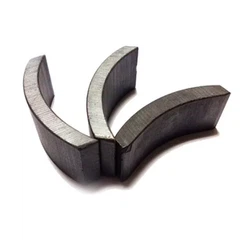
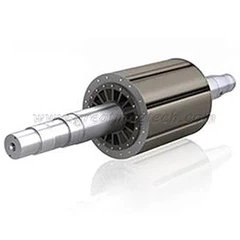
● Motors - Widely used in high-efficiency servo motors, stepper motors, generators, electric vehicles, and other rotary motion equipment. The strong magnetic field significantly improves motor performance.
● Sensors - Utilized in manufacturing various industrial sensors, including magnetic position, linear, speed detection, and other automation and process control sensors.
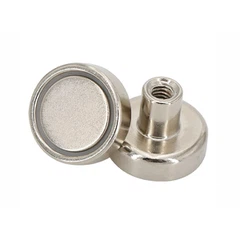
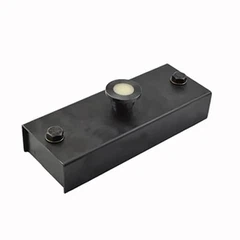
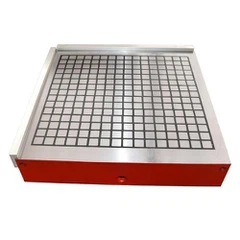
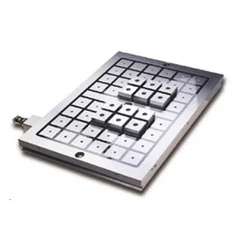
● Magnetic assemblies - Ideal for magnetic work holders, lifters, separators, conveyors, grabbing and handling applications due to their high power. They are ubiquitous in industrial magnetic assemblies.
● MRA machines - The stable magnetic field of N45 magnets is essential for magnetic resonance angiography to create images of blood vessels.
● Loudspeakers - High-end headphones, earphones, and audio speaker systems use N45-grade neodymium magnets to improve sound quality and volume.
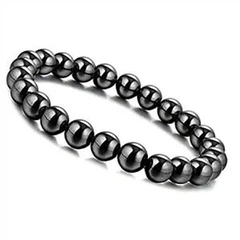
● Jewelry - Some magnetic jewelry items like therapeutic bracelets, pendants, and clasps contain tiny N45 magnets to provide a strong field.
● Research equipment - N45 magnets are widely integrated into physics, chemistry, biology, and other lab equipment for research experiments needing strong magnetic fields.
● Refrigeration - Magnetic cooling systems built for industrial and commercial use employ N45-grade neodymium magnets for efficient performance.

What Material is N45SH?
N45SH is a grade of neodymium magnet specifically engineered for high-temperature stability. The letters "SH" in N45SH stand for "Super High Temperature."
Neodymium magnets can lose strength and flux density significantly under high heat. But N45SH grade counters this with improved thermal stability. The advanced alloy composition maintains essential magnetic qualities like high magnetic field strength, powerful pull force, and high coercivity even at higher operating temperatures.
This makes N45SH magnets well-suited for applications like motors, sensors, and magnetic assemblies requiring heat exposure without compromising magnetic field strength. The maximum energy product, indicated by "N45", is typically 12,000-13,000 MGOe for this grade.
How Many Gauss is an N45?
N45 neodymium magnets have a high remanence or residual flux density of around 13,500 Gauss. This refers to the magnet's magnetic field strength at its surface.
Gauss is the unit used for measuring magnetic flux density. 13,500 Gauss equals 13,500 milligauss. So N45 magnets can produce a magnetic field of 135,000 milligauss.
This high Gauss rating puts N45 magnets in the category of medium-strength magnets. But they are at the top of medium grade with their powerful 135,000 milligauss rating.
The high Gauss makes N45 magnets useful for many applications needing magnetic solid force, like holding objects, lifting heavy loads, scientific experiments, and manufacturing electronics.
Even though they are brittle, N45 magnets have become popular as they provide strong magnetism at a reasonable price point.
Price of N45 Magnet Against Ferrite
N45 neodymium magnets cost significantly more than standard ferrite magnets. Here is a typical price comparison:
● N45 neodymium magnets - $0.60 to $25 per magnet
● Ferrite magnets - $0.01 to $10 per magnet
So per magnet, N45 can be 10 to 50 times more expensive than ferrite. However, we must consider that the magnetic strength of N45s is 5-10 times higher than ferrite.
Also, N45 cannot be substituted by multiple ferrite magnets in many applications. This is because N45 easily overpowers ferrite, and the magnetic properties differ vastly.
Therefore, while the upfront cost is higher, N45 magnets are more cost-effective for systems requiring strong permanent magnetic forces in the long run. The high performance justifies the increased price.
What is the Difference Between N42 and N45 Magnets?
N42 and N45 magnets have slightly different magnetic properties. The maximum energy product, which indicates magnetic strength, is 42 MGOe for N42-grade neodymium magnets. N45 grade neodymium magnets have a slightly higher maximum energy product of 45 MGOe.
This slight 3 MGOe difference results in N45 magnets possessing around 5-10% greater magnetic strength than N42 grade neodymium magnets.
Other factors like coercivity, remanence, and temperature resistance are similar. But N45 outputs marginally higher flux density and Gauss rating.
So for applications that require the absolute maximum magnetic strength, N45 would be the better choice over N42. For less demanding needs, N42 can be a more economical option.
Understanding Neodymium Magnets Grades and Tables
Neodymium magnets come in different grades based on their magnetic power and maximum heat tolerance. The number indicates the magnet's maximum energy product, which tells us the magnetic strength - the higher the number, the more powerful the magnet.
The grades can withstand different operating temperature ranges without losing magnetism. This allows for selecting the correct grade for different working environments. Critical specifications like maximum energy product, flux density, temperature resistance, pull force, coercivity, etc, define each neodymium grade.
There are also material grades like N45SH and M15SH that indicate the orientation and magnetic field uniformity.
Manufacturers provide detailed datasheets and specification tables for all grades they produce. These tables list the critical parameters and allow proper grade selection for an application based on its magnetic strength, temperature, and orientation needs. It is highly recommended to thoroughly consult the specifications of each grade during the magnet selection process.
Even slight variations in the magnetic properties between grades can significantly affect performance for specific uses. An application may need a grade that can operate at very high temperatures without loss of magnetism, while another application may require high pull force over other factors.
Carefully going through the specifications can ensure the most optimal grade is chosen. The goal is to match the critical performance characteristics of the magnet grade to the specific requirements of the application.

The Bottom Line
N45 neodymium magnets offer powerful magnetic properties ideal for various demanding industrial applications. Their high Gauss rating, flux density, coercivity, temperature resistance, and maximum energy product deliver tremendous magnetic strength and stability.
While N45 magnets cost more upfront than ferrite, their 5-10X greater strength often makes them more economical in the long run for applications needing strong permanent magnetic forces.
Carefully consider key specifications like maximum energy product, temperature tolerance, and magnetic orientation to select the optimal N45 grade magnet for your requirements.