


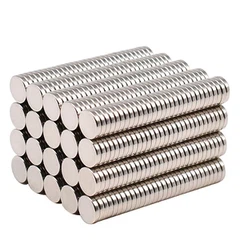
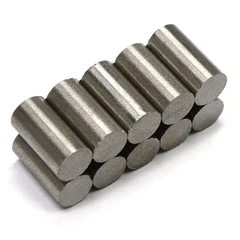
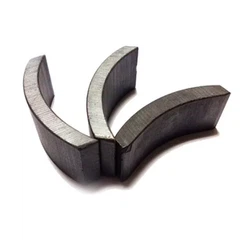
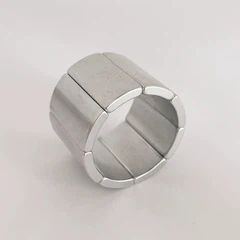

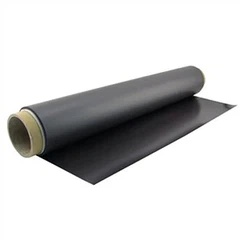
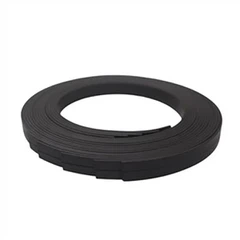

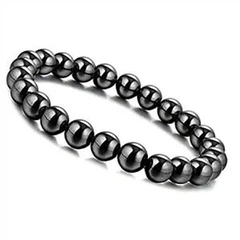


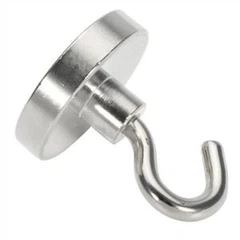
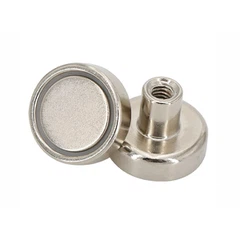
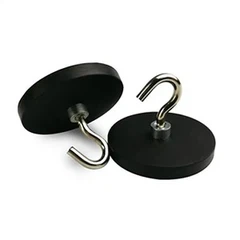
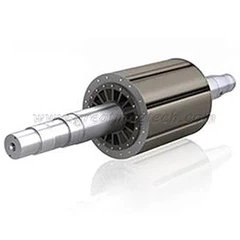


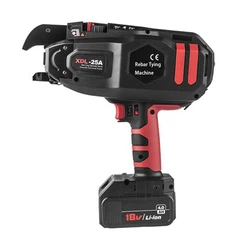
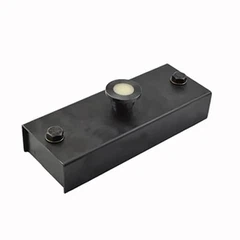
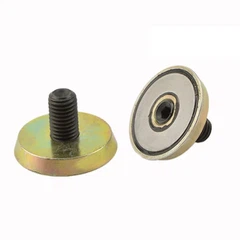
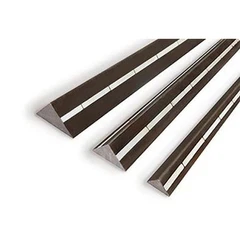
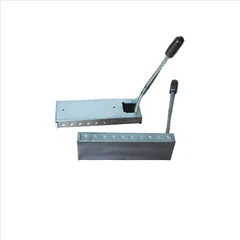


Sintered NdFeB permanent magnets, as one of the important substances to promote the progress of contemporary technology and society, are widely used in the following fields: computer hard disks, magnetic resonance imaging, electric vehicles, wind power generation, industrial permanent magnet motors, consumer electronics (CD, DVD, mobile phones, stereos, copiers, scanners, camcorders, cameras, refrigerators, televisions, air conditioners, etc.) and magnetic machinery, magnetic levitation technology, magnetic transmission, and other industries.
With the expansion of the market, its manufacturers are also increasing day by day, and many customers are inevitably caught in such confusion, how to judge the pros and cons of the product?
The most comprehensive judgment method: 1. Magnet performance; 2. Magnet size; 3. Magnet coating.
First of all, the guarantee of magnet performance comes from the control of the raw material production process
1. According to the requirements of the enterprise to manufacture high-grade, mid-grade, or low-grade sintered NdFeB, the raw materials are selected according to the raw material composition stipulated by the national standard.
2. Whether the production technology is advanced or not directly determines the performance and quality of the magnet.
3. In terms of magnetic field orientation, China is the only country in the world that adopts two-step pressing. During orientation, it is formed by vertical pressing with small pressure, and finally, quasi-isostatic pressing is used. This is one of the most important features of China's sintered NdFeB industry.
4. In addition, the monitoring of the quality of the production process is very important, which can be controlled by means of SC sheet thickness measurement and JM powder particle size distribution.
The permanent magnets of each shape have different sizes, and it is difficult to do one molding in the production process. The general production process is: first produce large (large-sized) billets, after sintering and tempering treatment, and then through mechanical processing (including cutting, drilling) and grinding, surface coating (coating) treatment, and then carry out Inspection of magnet performance, surface quality and dimensional accuracy, followed by magnetization, packaging, and delivery.
1. Machining is divided into three categories:
(1) Cutting process: Cut cylindrical and square cylindrical magnets into discs and squares;
(2) Shape processing: processing circular and square magnets into fan-shaped, tile-shaped, or magnets with grooves or other complex shapes;
(3) Drilling processing: The round bar and square bar magnets are processed into cylindrical or square cylindrical magnets. The processing methods are grinding and slicing, EDM, and laser processing.
2. The commonly used grinding methods for square NdFeB permanent magnet alloys include plane grinding, double-end grinding, internal grinding, and external grinding. Cylinders are commonly used for coreless grinding and double-end grinding. Tile, sector, and VCM magnets use a multi-station grinder.
Again, the quality of the magnet coating directly determines the service life of the product
At present, the sintered NdFeB permanent magnet manufacturing industry generally adopts electroplating, electroplating + electroless metal plating, electrophoresis coating and phosphating treatment, etc., to coat the surface of the magnet with an additional spacer to isolate the surface of the magnet from the corrosive medium, in order to prevent the damage of the medium to the magnet.
1. Generally, three processes are galvanized, nickel-plated + copper + nickel, nickel-plated + copper + electroless nickel-plating, and other metal plating requirements are generally applied to another metal plating after nickel-plating.
2. Phosphating is also used in some special cases: (1) When NdFeB magnet products have been turned over and stored for too long and the subsequent surface treatment method is unclear, it is simple and easy to use phosphating; ( 2) When the magnet needs epoxy adhesive bonding, painting, etc., the bonding force of epoxy organics such as glue and paint requires the matrix to have good infiltration performance. The phosphating process can improve the wetting ability of the magnet surface.
3. Electrophoretic coating has become one of the widely used anti-corrosion surface treatment technologies. Because it not only has a good bonding force with the surface of the porous magnet but also has excellent corrosion resistance against salt spray, acid, alkali, etc. However, compared with spray coatings, its moisture and heat resistance are poor.
To sum up, the customer can only correctly judge the qualification of the product if he understands the production process and the requirements of the product. In short, it is the grasp of performance, the control of dimensional tolerance, the detection of coating, and the evaluation of appearance.